
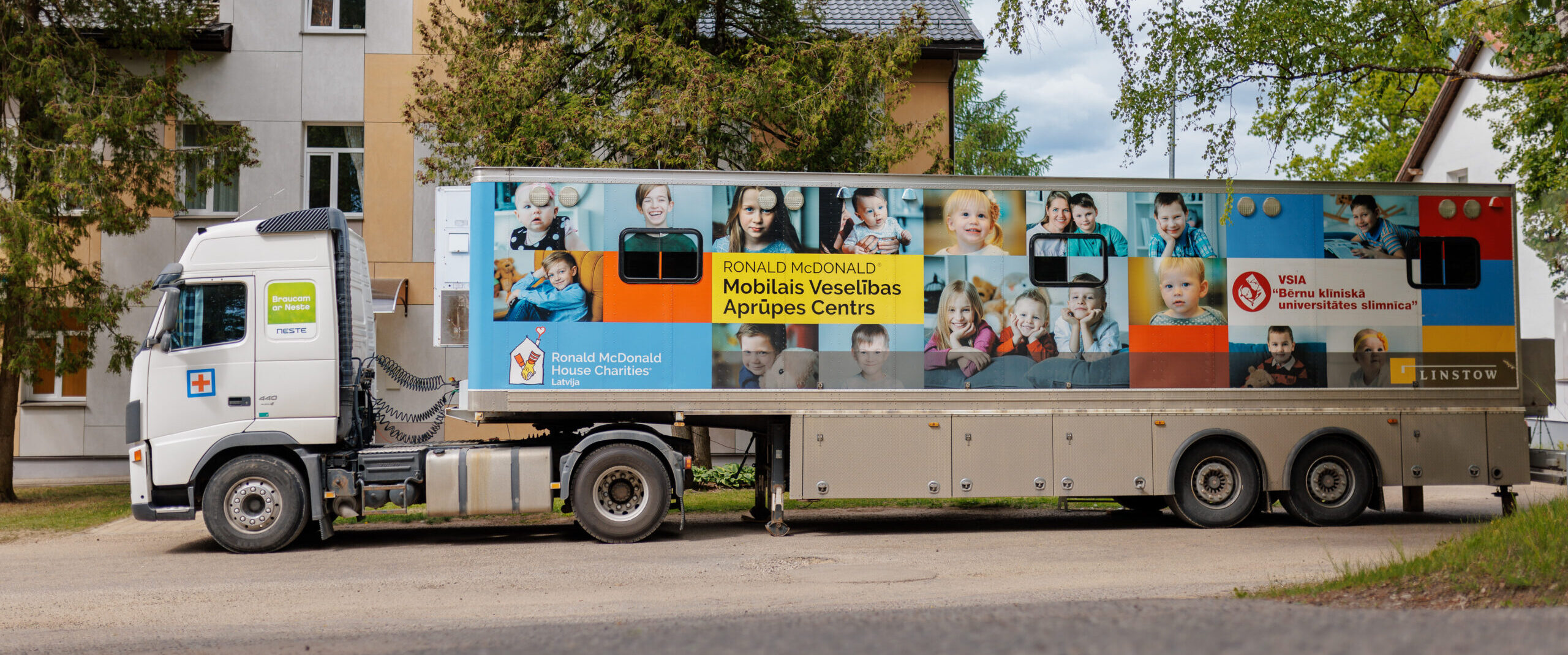
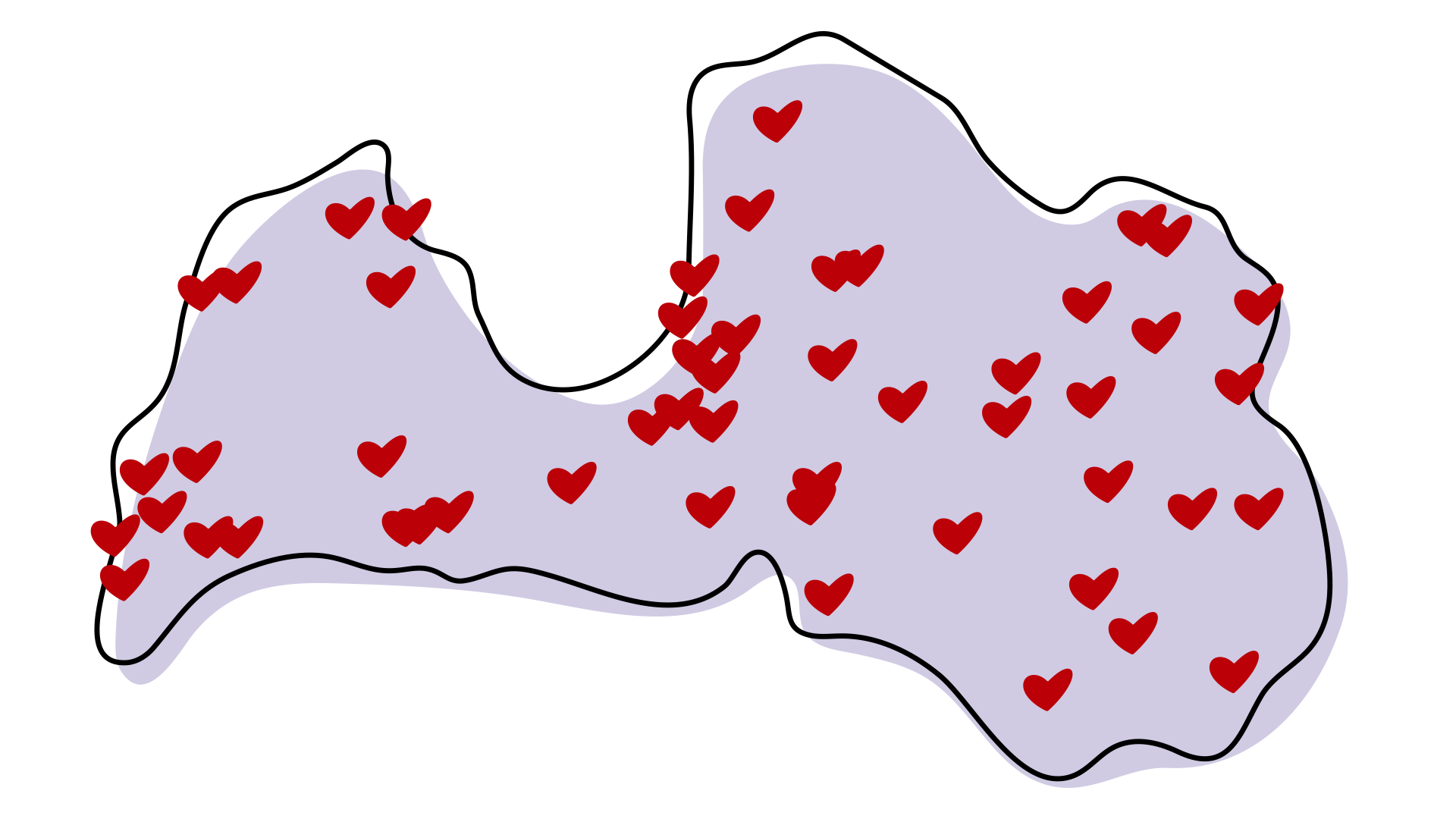
We, Ronald McDonald Māja Latviā, run the “Children’s Health Bus” programme, bringing medical specialists directly to children in Latvia’s regions – so that families don’t have to travel a long way into the city just to get an answer to one important question: “What is really going on with my child?”
The bus is staffed by specialists from the Children’s Clinical University Hospital (BKUS) and other medical institutions. We provide consultations across a range of fields – ophthalmologist (eye doctor), ENT/otolaryngologist, neurologist, allergist, endocrinologist, gastroenterologist, dermatologist, paediatric surgeon/orthopaedist, optometrist, physical and rehabilitation medicine specialist, speech therapist, and others – and every trip is planned around the needs of the children.
Our consultations for children and teenagers up to 18 years of age are free of charge, and no referral from a family doctor is required. However, booking in advance is essential. To make the visit as useful as possible, we ask that you bring the child’s identity document showing their personal identity number and, if possible, any previous medical records.
The “Children’s Health Bus” is a mobile medical consultation programme that travels out to Latvia’s regions, providing children with free specialist appointments closer to home. Our goal is to reduce the barriers to healthcare, namely the travel, the time, the queues and the stress that often keep families from seeking help in good time.
Our programme is tailored to the needs of each region. This means that in one location there may be greater demand for an eye doctor and optometrist, while in another the need may be for a gastroenterologist, neurologist or allergist.
Our specialists:
An important principle in our work is continuity of care: we collaborate with doctors and support staff in the regions, since they are often the ones who continue the child’s care after the visit.”
We very much want every child to have enough time and attention during their visit, which is why the “Children’s Health Bus” works by appointment only. In the regions, appointments are usually arranged by our coordinators: family doctors, preschool and school nurses, staff from local authorities and social services, and representatives of our partner organisations.
In practice, it works like this:
Important to know: the Bus is not an emergency service. If a child has acute, dangerous symptoms (for example, severe trauma, difficulty breathing, loss of consciousness, or sudden very severe pain), you must act immediately and seek emergency care.
We hear the same story in many regions across Latvia: “We’d like to go and see a specialist, but it’s far away, it’s expensive, the child gets tired, you have to take a day off work, and the appointment is a long time away.” That’s why the mobile approach isn’t a luxury. It’s a practical solution.
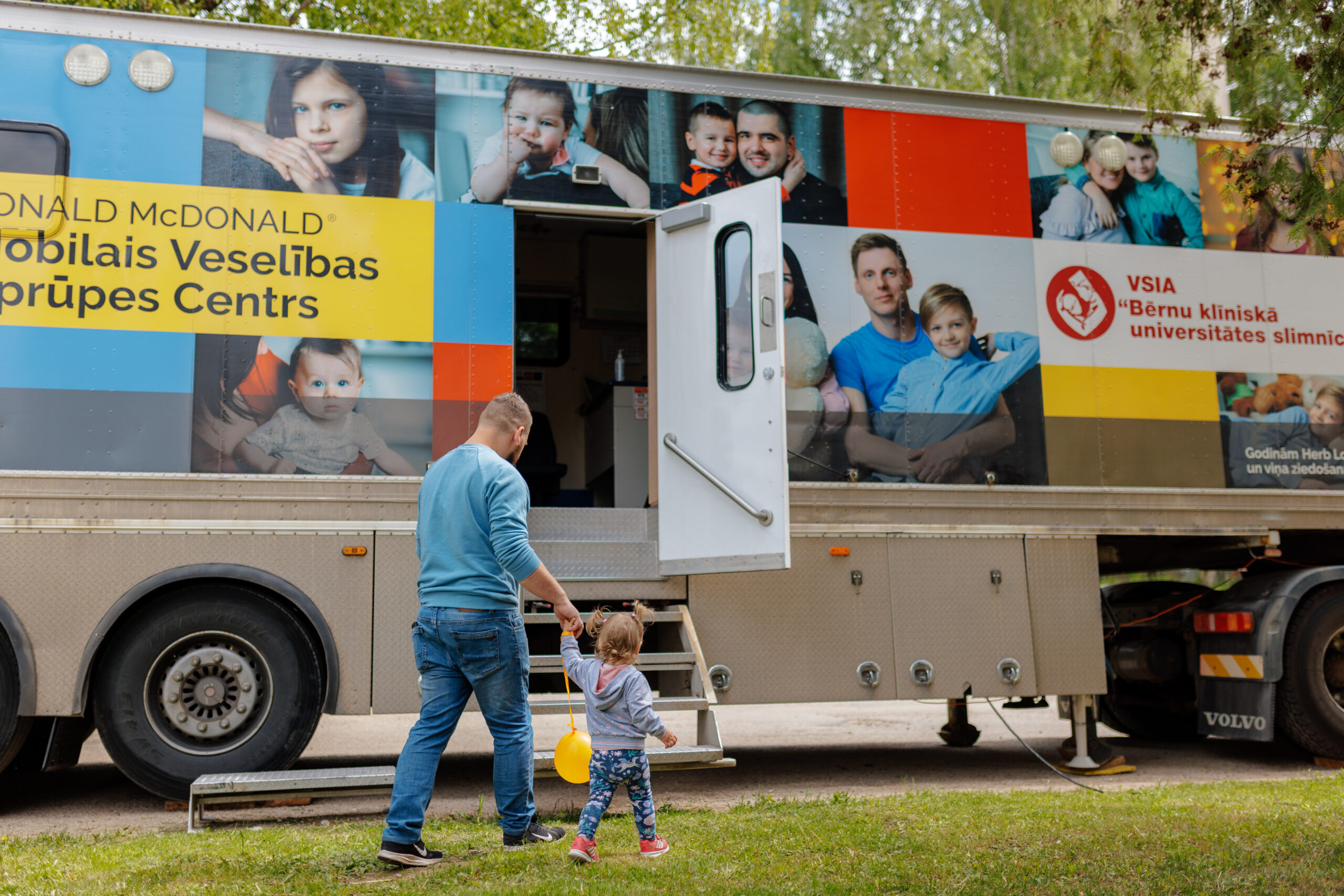
Key benefits for the family:
Sometimes parents ask: “Do we really need a specialist? Maybe it will pass.” We understand: everyday life is busy, children grow and change, and sometimes it’s hard to tell what’s normal and what’s a warning sign.
Our simple principle: if the difficulties persist, interfere with a child’s learning or everyday activities, or cause ongoing stress in the family, it’s worth checking the child’s health and seeing a specialist.
On one of our trips, a primary-school-aged child was brought to us who was often described at school as “restless” and “disruptive”. Particular difficulties arose in situations that required concentrating on the board for long periods, copying out text or reading. At such moments, the child would quickly lose patience, become restless, interrupt others and avoid doing the tasks.
After a calm conversation with the doctor and an assessment of the child’s vision, it became clear that there were vision difficulties. Once the family received a clear action plan and vision correction was sorted out, the tension eased. It became easier for the child to keep up in lessons, and the behavioural problems decreased significantly.
This story is a reminder: a child’s behaviour is sometimes a consequence, not a cause. And it’s precisely a medical check that can give the answer as to why a child is struggling.
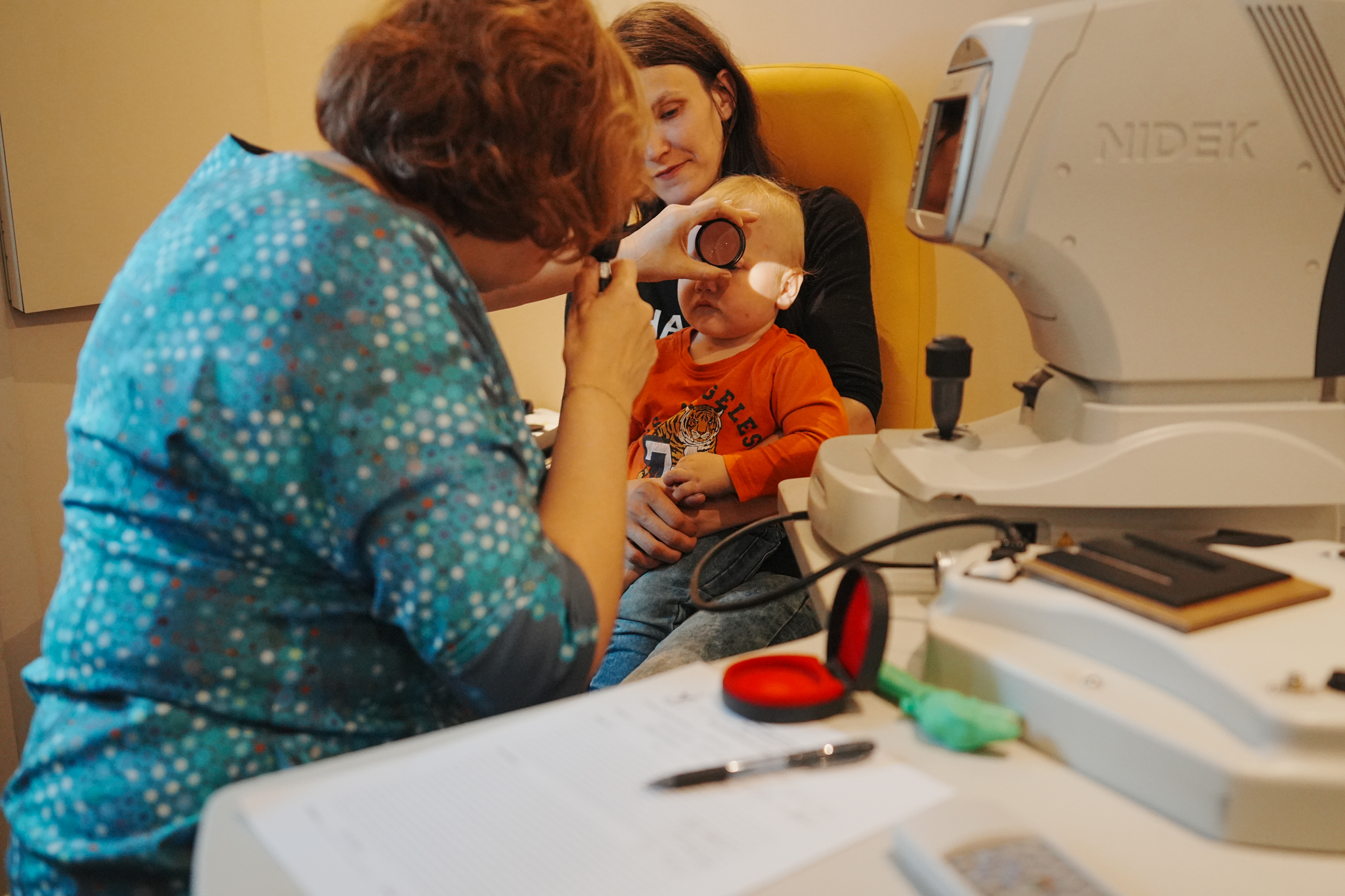
Vision:
Hearing and ear, nose and throat health:
Breathing and allergies:
Stomach, eating and growth:
Skin and the musculoskeletal system:
Speech and functional skills:
A child’s emotions and body work as a single system. If a child can’t see, can’t hear, feels discomfort or is constantly tired, they are more likely to become irritable, anxious or impulsive. Stress and emotional strain, in turn, can intensify physical complaints (for example, headaches or stomach aches). That’s why the first step is often a simple one: we check the health basics and help.
Essential:
Strongly recommended:
Depending on the reason for the visit: