


When a Child’s Behavior Changes: How to Identify the Real Cause and Help the Child Feel Heard
We at Ronald McDonald House in Latvia have found that a child’s “disobedience” is very often not a sign of a bad temperament, but rather a signal of a need that the child has not yet learned to express in words. Changes in behavior can be related to vision or hearing, fatigue, health issues, emotional distress, or situations at home or at school.
In this article, we explain the following in a practical and empathetic way:
- Why changes in behavior are worth paying attention to,
- how mental health affects the body (and vice versa),
- Why does mobile healthcare help identify problems early on,
- How to Talk to a Child So That They Feel Heard
- what signs to look for and when to seek professional help,
- Where to find support and reliable resources in Latvia.
What helps a child the most is an adult who is calm rather than critical, and who is willing to work together to find solutions.
Behavioral changes are a signal, not “bad behavior”
Children often “speak” through their behavior. When words aren’t available yet or they’re afraid to say them, their body and actions speak for them:
- “It’s hard for me.”
- “I don’t understand what they want from me.”
- “I feel threatened or ashamed.”
- “I’m in pain / I can’t see / I can’t hear.”
- “I feel overwhelmed.”
It’s important to remember: behavioral changes alone are not a diagnosis. They are a reason to look deeper and examine the underlying causes. Sometimes a single discovery (such as vision correction) is enough for a child to be able to learn again, regulate their emotions, and believe in themselves.
A Short Case Study on Vision
During one of our “Children’s Health Bus” outreach visits, a child came to us about whom the adults were concerned: “disrupts class,” “can’t sit still,” “doesn’t listen,” “gets angry quickly when having to copy from the board.” The child described himself briefly: “Everything just blurs together for me.”
The evaluation revealed vision problems. The child wasn’t “lazy” or “stubborn”—he simply had trouble seeing and keeping up with the tasks. Once the family received a clear action plan and a solution was found for the child, his behavior gradually changed: his stress levels decreased, his well-being improved, and he became more confident.
This is a very important reminder for us: sometimes a “behavioral problem” starts with something very practical and verifiable—sight, hearing, sleep, pain, or fatigue.
Mental health and physical health go hand in hand
A child’s mind and body are not two separate entities. If a child experiences prolonged stress, shame, fear, anxiety, or sadness, this is often reflected in the body as well.
What do we, as adults, notice most often in our daily lives:
- changes in sleep patterns (difficulty falling asleep, nightmares, waking up early, “no energy in the morning”),
- changes in appetite (eating much less or, conversely, “seeking comfort in food”),
- headaches or stomachaches with no apparent cause,
- frequent crying or irritability,
- increased irritability or aggression,
- avoidance (of school, extracurricular activities, friends),
- difficulty concentrating and remembering,
- very low self-esteem (“I can’t do anything right”).
Important: These symptoms can result from both emotional stress and medical causes. Therefore, our safety principle is twofold:
- we check the physical basics (sleep, health, vision, hearing, pain),
- At the same time, we focus on emotions and relationships (communication, safety, support).
When a child feels safe and understood, it becomes easier for their nervous system to “calm down.” And when the body feels better (for example, when pain or vision problems are resolved), emotions also become easier to manage. It’s a virtuous cycle.
Why Mobile Healthcare Is So Important for Families
In Latvia, many families live in areas where it is simply not easy to see a specialist: distance, time, long wait times, transportation, work, and having several children in the family. Sometimes it is precisely these obstacles that cause a problem to drag on—not because parents don’t care, but because they lack the necessary resources.
That is why we created and are developing the “Children’s Health Bus” program, so that professional help can reach children and families more easily.
What are the practical benefits of mobile healthcare:
- less travel and lower expenses for families,
- a greater chance of detecting problems early (such as vision or hearing difficulties),
- A clearer action plan for parents: what to do next, what tests are needed, who to contact,
- a more peaceful family life, as uncertainty gives way to a clear direction,
- collaboration with local specialists and continuity of care (so that the child continues to receive support even after the visit).
Important to Know (Practical Information):
- Our counseling services are intended for children and adolescents up to 18 years of age,
- Appointments are made by prior appointment,
- Registration in the regions is often organized with the help of local coordinators (such as family doctors, school and preschool medical staff, municipal and social services, and partner organizations),
- For a consultation, you will typically need the child’s identification document and, if possible, previous medical records (medical records, test results, eyeglass prescriptions, etc.) so that the visit is productive and time is not wasted on repeating information.
Our experience shows that the earlier a child receives help, the less suffering and conflict builds up.
A timely response is often the best form of mental health support.
How to Communicate So That Your Child Feels Heard
A child feels heard not when we find the “right advice,” but when he or she feels: “I am trusted,” “I am not being shamed,” “we’ll do this together.”
The Quick Rule: NOTICE – NAME – HELP
NOTICE
- “I’ve noticed that lately it’s been harder for you to sit still.”
- “I’ve noticed that you get angry more easily when there’s homework to do.”
NAME
- “It sounds like that might be exhausting.”
- “Maybe you’re feeling anxious or confused?”
HELP
- “I’m right here. Together, we’ll figure out what’s going on.”
- “We can talk now or in a little while—it’s up to you.”
- “We’ll also check your vision, hearing, and overall health so you don’t have to go through this alone.”
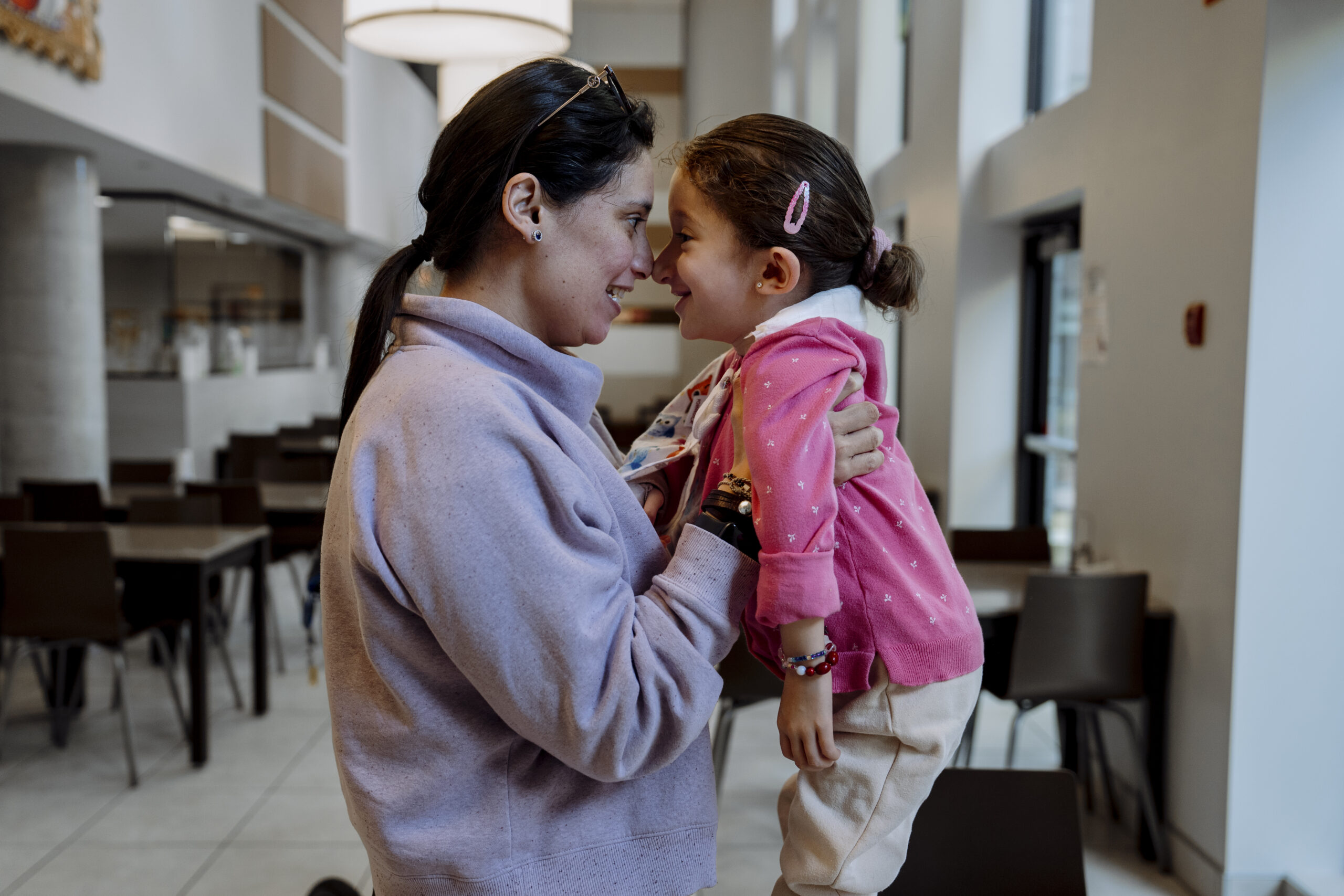
Phrases that help a child:
- “I’m listening to you. Take your time.”
- “What you feel is important.”
- “Thanks for saying that.”
- “I can see that you’re having a hard time—and that doesn’t mean you’re a bad person.”
- “What would you like me to do: listen, help you figure it out, or just be there for you?”
- “We will look for the cause, not the culprit.”
Phrases You Should Avoid (Because They Often End the Conversation)
- “Nothing crazy.” → “I can see that this is giving you trouble.”
- “You’re exaggerating.” → “Tell me what it looks like from your perspective.”
- “Stop crying.” → “It’s okay to cry. I’m here.”
- “What’s wrong with you?” → “What’s going on with you? How can I help?”
Small Habits That Strengthen a Child’s Mental Health
- 10 minutes a day of “special time” without a phone (the child chooses what to do: play a game, draw, go for a walk).
- A consistent sleep schedule (as consistent as possible on both workdays and days off).
- “Emotion Vocabulary Practice”: joy, anger, sadness, fear, shame, disappointment, tiredness (children often lack the words to express their emotions, so they express them through their behavior).
- Clear boundaries when it comes to physical discipline: “I’ll always love you, but hitting or name-calling isn’t allowed. Let’s find another way to express our anger.”
A Practical Action Plan for Families
When behavior changes, a simple sequence can help: safety → observations → well-being → conversation → professional support.
The Most Common Causes of Behavioral Changes and the First Steps
| Possible cause | What to Look For (Signs) | The First Step at Home | When to See a Specialist |
|---|---|---|---|
| Vision problems | The child leans very close to the book or screen, squints, complains of headaches, gets tired quickly while reading, becomes restless, avoids writing or reading, and “can’t keep up” with what’s on the board | Ask: “Can you see everything clearly?” Notice in which situations it becomes more difficult (working at the blackboard, reading, sports). Arrange for an eye exam | If the symptoms persist for 2+ weeks or interfere with schoolwork or daily life; if the child frequently complains of headaches or avoids tasks |
| Hearing difficulties | The child often asks the same question repeatedly, “doesn’t respond” when spoken to, has difficulty in noisy environments, raises their voice, and becomes irritable in a group setting | Make sure to speak to the child face-to-face. Observe their reactions in different settings (at home, at school, in a club). Arrange for a hearing evaluation | If there are concerns about hearing or speech/language development difficulties; if there are persistent complaints at school that the child “doesn’t listen” |
| Emotional stress (anxiety, sadness, distress) | Changes in sleep or appetite, frequent crying or anger, avoiding school, fear, perfectionism, withdrawal, complaints of stomachaches or headaches | The “Notice–Name–Help” Conversation. Temporarily reduce the workload. Introduce more predictability (routines) and “special time” | If symptoms are severe or last longer than 2–4 weeks; if the child can no longer cope with daily life; if there is self-harm or talk of wanting to end one’s life |
| Medical reasons (sleep, pain, chronic conditions, etc.) | Persistent fatigue, irritability, difficulty concentrating, physical symptoms, sudden changes in energy levels or mood | Write down your symptoms (when they started, when they get worse, what helps). Review your sleep schedule. Talk to your family doctor or pediatrician. | If you experience sudden weight changes, frequent pain, dizziness, or severe fatigue |
| Environmental factors (conflicts, divorce, relocation, bullying, work overload) | The child doesn’t want to go to school, becomes withdrawn, fearful, and irritable; often has “emotional outbursts”; changes friends; and loses their sense of joy | Find out what’s going on at school and in their relationships. Find a trusted adult at school. Reduce their extra workload. Maintain a calm, stable routine at home. | If there are signs of bullying or abuse; if a child refuses to go to school; if the situation at home is very tense and the child is suffering |
We urge you to seek help immediately if:
- a child says they don’t want to live or want to harm themselves,
- there are signs of self-harm,
- poses a serious threat to themselves or others,
- the child suddenly becomes very confused, very aggressive, or completely withdrawn,
- there are acute medical symptoms (severe pain, difficulty breathing, convulsions, etc.).
In such cases, act immediately: call emergency services and stay with the child.
Useful Resources in Latvia
Emergency Care (Acute Cases):
For children and adolescents (emotional support and crisis counseling):
- Helpline for Children and Teens: 116111
- https://www.bac.gov.lv/lv/informacija-par-uzticibas-talruni
- https://www.bac.gov.lv/lv/bernu-un-pusaudzu-uzticibas-talrunis-116111
For adults (if the parent needs support in order to be able to help their child):
- Psycho-emotional Support Hotline: 116123
- https://www.vmnvd.gov.lv/lv/vienotais-bezmaksas-krizu-talrunis-116-123
Information about mental health care options and government-funded support:
- https://www.vmnvd.gov.lv/lv/psihiska-veseliba
- https://www.vmnvd.gov.lv/lv/jaunums/iedzivotaji-ar-psihiskas-veselibas-sarezgijumiem-var-sanemt-valsts-apmaksatas-psihologu-konsultacijas
Mental Health of Children and Adolescents (Educational Information):
About our “Children’s Health Bus” program (information about the program and availability):